How to Transition a Cat to an Automatic Litter Box
Use a gradual, low-pressure automatic litter box transition: preserve location, litter, and a backup box before introducing power and normal cycles.

This guide explains decision criteria and does not claim hands-on product testing.
On this pageBrowse sections
The transition principle
Change one variable at a time. An automatic litter box can introduce a new shape, doorway, floor texture, location, sound, movement, litter depth, and scent. If every variable changes on installation day, you will not know what caused hesitation.
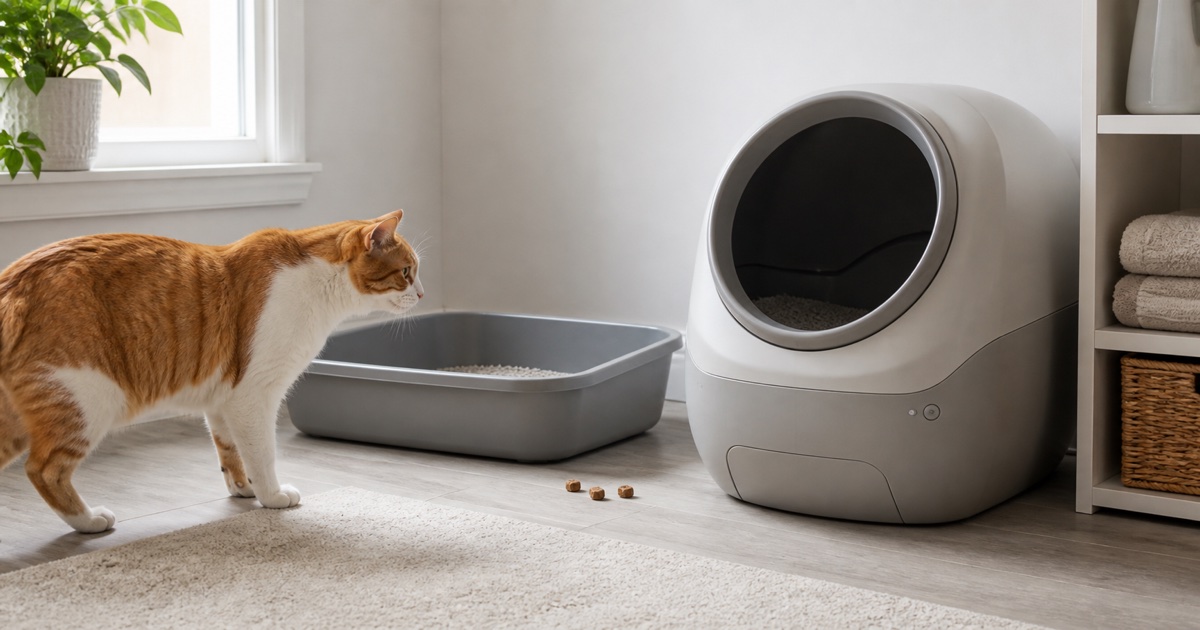
Start with the new machine acting like a stationary litter box. Preserve the familiar litter and location where possible, keep the old pan nearby, and add motion only after the cat has used the new box voluntarily.
Before the machine arrives
Confirm three practical points before opening the carton:
- The cat meets the manufacturer’s age and weight rules for automatic mode.
- The current litter is compatible with the sifting screen.
- The room fits both the old and new boxes during transition.
Read the trial and return terms, keep all packaging, and plan a clean storage place for the old pan. If the machine is physically wrong for the cat or room, behavior training will not repair the mismatch. Compare open-top and enclosed automatic litter boxes when doorway or turning space is uncertain.
Stage 1: set it up powered off
Place the automatic box where the old box was or immediately beside it when the manufacturer’s placement rules allow. Use a firm, level surface and keep the approach open. Fill only to the marked line with compatible litter.
Leave the unit powered off. Whisker specifically recommends semi-automatic use during acclimation; Neakasa also suggests manual cleaning for timid cats at first. Add a small cup of clean familiar litter or a little used litter from the old box to carry a recognizable scent.
Do not place the cat inside, block the exit, or hold the cat near the machine. Allow investigation by choice. Treats can be placed around the approach if the cat finds food rewarding, but the litter bed itself should remain a bathroom area rather than a feeding spot.
Stage 2: wait for voluntary use
Keep both boxes clean and accessible. We do not recommend making the old box dirty to force a choice. That may speed abandonment of the old pan, but it also removes a reliable resource and makes stress harder to distinguish from preference.
Look for actual use of the new box, normal entry and exit, and a willingness to return. One curious visit is not the same as acceptance. In a multi-cat home, track each cat separately; one cat’s use does not establish that the box works for every cat.
Our multiple litter box planning guide explains why one automated unit does not automatically replace socially separated resources.
Stage 3: introduce one cleaning cycle
After confirmed use, run one manual cycle according to the model instructions. Give the cat distance and a clear exit. If the cat watches calmly, let the cycle finish. If the motion produces avoidance, turn the machine off and return to stationary use before trying again later.
Never run automatic mode for a kitten or cat below the manufacturer’s sensor threshold. Safety sensors do not cancel published minimum-weight rules.
When several manual cycles are tolerated and the cat continues to use the box, enable normal automatic operation. Choose a longer post-use delay for a cautious cat when the model offers that setting.
When to move or remove the old box
Wait for repeated voluntary use across multiple days and normal behavior around completed cycles. Then move the old box gradually rather than making it disappear during the first successful week.
Do not remove it if:
- another cat still uses it;
- the automatic entry is difficult for any household cat;
- the only remaining box could be blocked by another pet;
- the machine is offline, jammed, or outside safe-use guidance.
A conventional backup remains sensible even after a successful transition, especially during maintenance, travel, power interruption, or firmware troubleshooting.
Troubleshooting hesitation
If the cat investigates but does not enter, check entry height, roof, litter texture, litter depth, location, and nearby noise. For large bodies, use the large-cat automatic litter box criteria. For older cats, recheck the Senior Cats entry and ramp shortlist.
If elimination behavior changes abruptly or the cat stops using all available boxes, pause the transition and contact a veterinarian. Do not treat app data, reluctance, or house-soiling as a product-only issue.
Bottom line
The safest transition is not a countdown. It is a sequence: correct fit, powered-off exploration, voluntary use, supervised manual cycles, normal automation, and only then a gradual change to the old box. Preserve choice long enough for the cat—not the return-window calendar—to provide the evidence.
Evidence trail
Sources reviewed
These sources support the factual and safety context on this page. Product fit still depends on the individual cat, household, and current manufacturer instructions.
- Getting started with Litter-Robot 4 ↗Whisker Support
Used for same-location placement, powered-off semi-automatic introduction, familiar litter, and setup guidance.
- Neakasa M1 Plus product FAQ ↗Neakasa
Used for the manufacturer's powered-off/manual transition and familiar-location suggestions.
- The behavioral impact on cats during a litter transition ↗Animals
Used for the principle that litter changes should be gradual and individual response matters; it did not test automatic boxes.
- AAFP and ISFM house-soiling guidelines ↗Journal of Feline Medicine and Surgery
Used for accessible placement, individual box preference, cleaning, and preserving adequate litter-box resources.
Frequently asked questions
How long does it take a cat to use an automatic litter box?+
There is no reliable universal deadline. Some manufacturer pages say many cats begin within days or a week, but the useful milestone is repeated voluntary use—not elapsed time. Keep a familiar clean option available until the behavior is stable.
Should I remove the old litter box immediately?+
No. Keep it nearby during the transition so the cat retains a familiar, safe elimination option. Remove or relocate it only after repeated voluntary use of the automatic box and only if the household still has enough accessible litter-box resources.