Best Grooming Gloves for Short-Haired Cats That Hate Brushes
Compare grooming gloves for short-haired cats that resist brushes by silicone tip density, hand fit, pair versus single-glove design, cleaning, and handling control.
PetGearWise may earn a commission from qualifying purchases after affiliate links are added. This guide currently links to official product information and receives no compensation for clicks. Read our affiliate disclosure.
Best match in this guide
Our top recommendation: DELOMO Zoe Pet Grooming Gloves
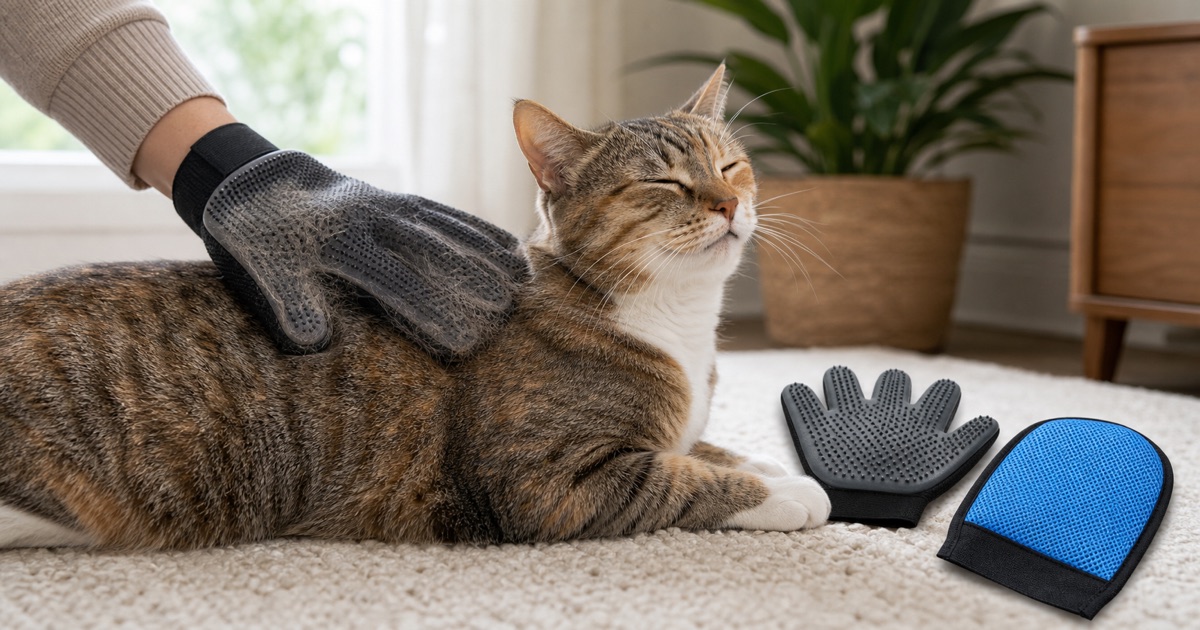
The Zoe pair covers both palms with 255 soft silicone tips and uses an adjustable wrist strap. The broad stroking surface makes it the closest substitute for two-handed petting, while collected short hair can be peeled from the tips once enough accumulates. It still needs a one-hand introduction rather than placing both gloves on an uncertain cat at once.
- Best for
- Short-haired cats that accept normal petting and owners who want a glove for each hand
- Buying note
- Listed at $18.99 when checked; confirm current color, pair contents, and retailer fulfillment.
On this pageBrowse sections
Decision first
Quick picks
The short answer
The DELOMO Zoe is the best starting pair for broad, petting-like strokes over a short coat. Choose HandsOn Animal Gloves when a measured hand size and finger control matter most. Choose Mr. Peanut’s Original if a single glove and one bare hand make a slower introduction easier.
Compare the glove format
| Pick | Package | Grooming surface | Main compromise |
|---|---|---|---|
| DELOMO Zoe | Pair | 255 silicone tips | Broad, less precise contact |
| HandsOn Animal Gloves | Sized pair | Rubber finger and palm nodules | Must measure the user’s hand |
| Mr. Peanut’s Original | Single glove | Soft rubber tips | Slower body coverage |
How we chose
We focused on glove-shaped tools with soft rubber or silicone contact, secure wrist adjustment, an official cat-use description, and enough construction detail to explain the handling difference. For a brush-averse cat, the number of teeth is less important than predictable pressure, hand control, and the ability to stop instantly.
We did not treat “massage” language as proof that a cat will accept the product. We also excluded metal deshedding edges because they answer a different search intent and require a different pressure technique.
Introduce one small change at a time
Place the unused glove nearby, reward voluntary investigation, and first touch the cat with a bare hand. Add the glove for one or two strokes on an area the cat normally enjoys, then stop before body tension, tail lashing, skin twitching, turning, swatting, or leaving escalates.
One glove can be easier at first even when the product comes as a pair. Do not hold the cat in place to complete a grooming session. “Hates brushes” describes the shopping problem, not a promise that a glove will overcome fear.
Use light, coat-direction strokes
Move with the short coat rather than scrubbing back and forth. Avoid eyes, whiskers, genitals, wounds, irritated skin, and any area where the cat objects. Check the rubber tips for tears or hardened edges before use.
If the cat tolerates firmer coat tools and loose undercoat is the main issue, compare deshedding brushes for long-haired cats separately. A cutting or metal-edge tool should not be substituted mid-session without a new introduction.
Match the glove to the human hand
A loose glove bunches and changes pressure; an overly tight glove reduces finger movement. Use the manufacturer’s size chart where one exists and tighten the wrist only enough to keep the palm stable. A pair speeds up coverage, while a single glove leaves one familiar hand free.
The same handling-first approach matters for claws. Our cat nail clippers with safety guards for beginners explains why a mechanical limit never replaces calm positioning and clear visibility.
Clean the glove after short sessions
Peel accumulated fur away when possible and wash only as the manufacturer directs. Let the glove dry completely before storage. Stop and seek veterinary guidance for bald patches, sores, dandruff with irritation, sudden sensitivity, or excessive grooming; a glove cannot diagnose or treat the cause.
The useful glove is the one that fits the owner’s hand, keeps pressure gentle, and lets the cat end the interaction before stress builds.
Research shortlist
The picks in detail
DELOMO Zoe Pet Grooming Gloves
Best for: Short-haired cats that accept normal petting and owners who want a glove for each hand
The Zoe pair covers both palms with 255 soft silicone tips and uses an adjustable wrist strap. The broad stroking surface makes it the closest substitute for two-handed petting, while collected short hair can be peeled from the tips once enough accumulates. It still needs a one-hand introduction rather than placing both gloves on an uncertain cat at once.
Why it stands out
- Pair of full-hand gloves
- 255 soft silicone grooming tips
- Adjustable wrist fit
Watch-outs
- Broad surface gives less precision around small areas
- Hair may not peel cleanly until enough collects
- A glove feel can still concern brush-averse cats
HandsOn Animal Gloves
Best for: Owners who need a glove size matched to the hand for controlled grooming around the body and legs
HandsOn offers paired gloves in multiple sizes with rubber nodules across the fingers and palms. A closer hand fit can improve control on a small cat, and the manufacturer says the gloves can be used wet or dry. More textured finger coverage also means the first sessions should be particularly brief.
Why it stands out
- Multiple hand sizes
- Finger and palm grooming nodules
- Pair works wet or dry
Watch-outs
- Correct hand measurement is required
- More texture can feel unfamiliar initially
- Pricier than basic one-size gloves
Mr. Peanut's Original Pet Grooming Glove
Best for: Owners who want to keep one bare hand available while introducing a grooming surface slowly
Mr. Peanut's Original is a single adjustable glove with soft rubber tips, so one bare hand remains available for treats, steady contact, or stopping the session. The tradeoff is slower coverage than a pair, and hand-orientation availability needs checking before purchase.
Why it stands out
- Single glove supports gradual introduction
- Adjustable wrist strap
- Soft rubber grooming tips
Watch-outs
- Slower than a two-glove pair
- Hand orientation must match the user
- One broad size may fit less precisely
Evidence trail
Sources reviewed
These sources support the factual and safety context on this page. Product fit still depends on the individual cat, household, and current manufacturer instructions.
- DELOMO Zoe Pet Grooming Gloves official product information ↗DELOMO official tip count, materials, fit, and price details
Used to verify current product specifications, pricing context, compatibility, and support information.
- HandsOn Animal Gloves official product information ↗HandsOn official size, construction, and wet-or-dry details
Used to verify current product specifications, pricing context, compatibility, and support information.
- Mr. Peanut's Original Pet Grooming Glove official product information ↗Mr. Peanut's official glove-format and material details
Used to verify current product specifications, pricing context, compatibility, and support information.
Frequently asked questions
Will a grooming glove work for every cat that hates brushes?+
No. A glove changes the shape and pressure of grooming but is still a new object touching the coat. Introduce it below the cat's stress threshold, stop for avoidance or agitation, and use another grooming plan if the cat does not become comfortable.
How often should I use a grooming glove on a short-haired cat?+
There is no universal schedule. Start with a few strokes during a calm moment and adjust to the individual coat, shedding level, skin condition, and tolerance. Avoid repeatedly working one area and follow veterinary advice for cats with skin problems.
Can a grooming glove remove mats?+
These soft gloves are for loose surface hair and gentle coat contact, not tight mats. Pulling at a mat can hurt or damage skin. Ask a veterinarian or qualified groomer to handle close, dense, or skin-adhered matting safely.