Best Cat Toothbrush and Toothpaste Kits for Beginners
Compare beginner cat dental kits by brush size, fingerbrush option, pet toothpaste flavor, package contents, replacement availability, and introduction workflow.
PetGearWise may earn a commission from qualifying purchases after affiliate links are added. This guide currently links to official product information and receives no compensation for clicks. Read our affiliate disclosure.
Best match in this guide
Our top recommendation: Virbac C.E.T. Cat Oral Hygiene Kit
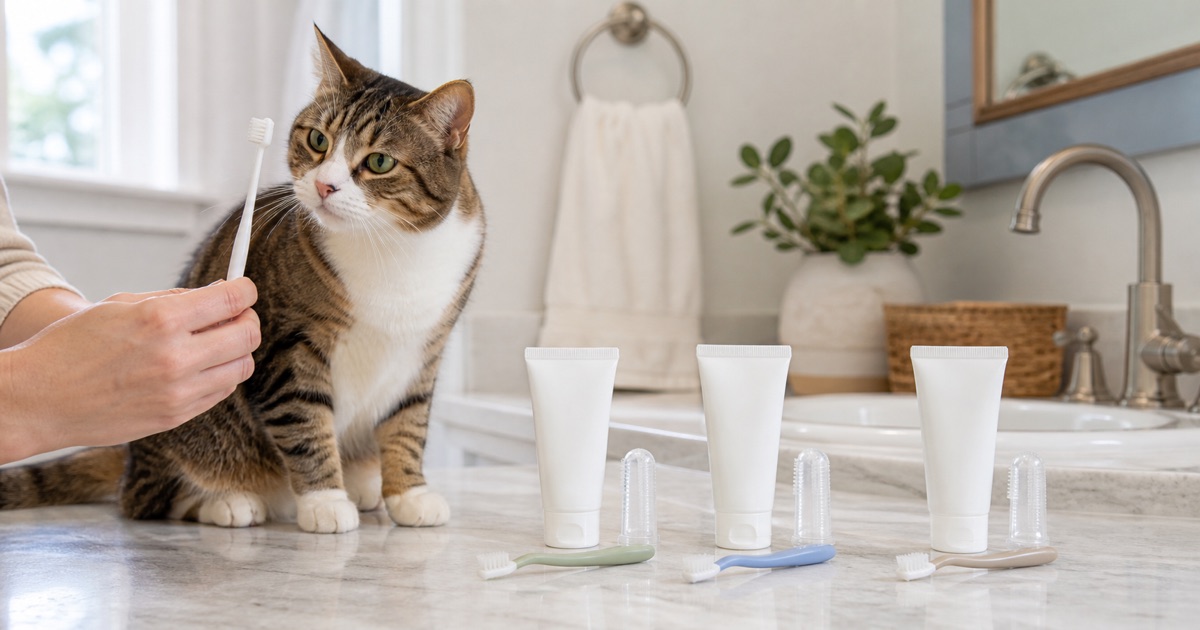
Virbac's cat kit combines a mini toothbrush, fingerbrush, and C.E.T. enzymatic toothpaste in seafood flavor. The two applicator styles let a beginner test which shape offers better control without buying separate packages, and the cat-specific brush is the clearest fit here.
- Best for
- Beginners who want both a mini toothbrush and fingerbrush with cat-oriented toothpaste in one box
- Buying note
- Verify the Cat Kit rather than the dog kit and confirm the current seafood-flavor toothpaste tube size.
On this pageBrowse sections
Decision first
Quick picks
The short answer
The Virbac C.E.T. Cat Oral Hygiene Kit is the strongest beginner package because it includes a cat-size mini brush, fingerbrush, and pet toothpaste. The Nylabone Cat Dental Kit is a useful angled-brush alternative. Choose the Vetoquinol Enzadent Kit when a dual-ended brush and readily matched replacement products matter more than cat-specific sizing.
Compare the starter kits
| Pick | Handled brush | Second applicator | Toothpaste |
|---|---|---|---|
| Virbac C.E.T. Cat Kit | Mini cat toothbrush | Fingerbrush | C.E.T. seafood enzymatic |
| Nylabone Cat Dental Kit | Angled cat toothbrush | Fingerbrush | Advanced Oral Care pet toothpaste |
| Vetoquinol Enzadent Kit | Dual-ended toothbrush | None in this kit | Enzadent enzymatic pet toothpaste |
How we chose
We required an official dog-or-cat oral-care kit with both a handled toothbrush and pet toothpaste. We then prioritized cat-specific sizing, a second applicator for comparison, clearly listed package contents, and the ability to replace the consumable toothpaste without replacing every tool.
We did not rank a kit by claims that use different test methods, and we did not treat any package as a substitute for a veterinary examination. Acceptance also cannot be predicted from flavor alone.
Begin without brushing
Ask a veterinarian to check the mouth and demonstrate a suitable home routine. At home, first let the cat investigate the closed tube and dry brush. On later days, introduce a tiny amount of pet toothpaste according to the label, then brief contact near the outside of the lips. Only progress while the cat remains relaxed.
Do not pry the jaw open, chase the cat with the brush, or aim to clean the full mouth in the first sessions. A short voluntary interaction is a better foundation than completing a forced schedule.
Pick the applicator you can control
A mini handled brush keeps the finger out of the mouth and can improve visibility. A fingerbrush gives direct tactile feedback but adds finger diameter and may feel too large for a small cat. A dual-ended brush offers sizes, though only the smaller end may be useful.
Use light pressure on accessible outer tooth surfaces and follow the kit and veterinary instructions. Replace worn or chewed applicators, never share a brush between pets, and store it away from food-preparation items.
Use only pet-labeled toothpaste
Pet toothpaste is designed to be used without human-style rinsing. Confirm the tube is intact, in date, and labeled for the species before every purchase. Flavor can help acceptance but should not justify forcing use.
Keep eating equipment easy to inspect and clean as a separate hygiene step. Our guide to dishwasher-safe cat bowls for wet food compares materials and removable parts, not dental-treatment claims.
Know when home care should stop
Stop for bleeding, sudden pain, broken teeth, swelling, strong new odor, pawing at the mouth, dropped food, or changes in appetite. These signs need veterinary assessment. Home brushing cannot remove established tartar safely or diagnose oral disease.
Cats that dislike other handling may need even smaller conditioning steps. The introduction process in our grooming gloves for short-haired cats that hate brushes uses the same principle: change one variable, keep sessions brief, and stop below the stress threshold.
The best beginner kit is not the one with the most pieces; it is the one with a cat-appropriate brush, pet-labeled toothpaste, and a routine the cat can learn without force.
Research shortlist
The picks in detail
Virbac C.E.T. Cat Oral Hygiene Kit
Best for: Beginners who want both a mini toothbrush and fingerbrush with cat-oriented toothpaste in one box
Virbac's cat kit combines a mini toothbrush, fingerbrush, and C.E.T. enzymatic toothpaste in seafood flavor. The two applicator styles let a beginner test which shape offers better control without buying separate packages, and the cat-specific brush is the clearest fit here.
Why it stands out
- Mini toothbrush plus fingerbrush
- Cat-specific kit
- Pet enzymatic toothpaste included
Watch-outs
- Seafood flavor may not suit every cat
- A fingerbrush can be bulky in a small mouth
- Kit purchase does not replace a veterinary oral exam
Nylabone Advanced Oral Care Cat Dental Kit
Best for: Owners who want a compact angled cat toothbrush, fingerbrush, and toothpaste from one product line
Nylabone's cat kit includes an angled toothbrush, fingerbrush, and 2.5-ounce toothpaste. The angled head provides a different grip from a straight mini brush and the two applicators support a staged introduction, but the manufacturer does not make the kit automatically appropriate for every mouth.
Why it stands out
- Angled cat toothbrush
- Fingerbrush included
- 2.5-ounce pet toothpaste
Watch-outs
- Toothbrush angle takes practice
- Fingerbrush may reduce visibility
- Flavor acceptance varies by cat
Vetoquinol Enzadent Toothbrush and Toothpaste Kit
Best for: Multi-pet homes or owners who want two brush-head sizes on one handle with pet enzymatic toothpaste
Vetoquinol lists the Enzadent kit for dogs and cats with its dual-ended toothbrush and enzymatic toothpaste. Two head sizes can help match the accessible tooth surface, but this is a shared dog-and-cat kit rather than a cat-specific mini-brush package.
Why it stands out
- Dual-ended toothbrush
- Pet enzymatic toothpaste included
- Replacement components sold in the same line
Watch-outs
- Not exclusively sized for cats
- No fingerbrush in this three-product kit
- Larger end may be irrelevant for a small cat
Evidence trail
Sources reviewed
These sources support the factual and safety context on this page. Product fit still depends on the individual cat, household, and current manufacturer instructions.
- Virbac C.E.T. Cat Oral Hygiene Kit official product information ↗Virbac US official Cat Kit contents and toothpaste details
Used to verify current product specifications, pricing context, compatibility, and support information.
- Nylabone Advanced Oral Care Cat Dental Kit official product information ↗Nylabone official cat-kit contents and brush details
Used to verify current product specifications, pricing context, compatibility, and support information.
- Vetoquinol Enzadent Toothbrush and Toothpaste Kit official product information ↗Vetoquinol US official cat oral-hygiene product listing
Used to verify current product specifications, pricing context, compatibility, and support information.
Frequently asked questions
Can I use human toothpaste on a cat?+
No. Cats swallow toothpaste rather than rinsing and spitting, so use only a product specifically labeled for pets and follow its directions. Do not substitute human toothpaste, baking-soda mixtures, or essential oils.
Is a fingerbrush easier than a cat toothbrush?+
It depends on hand size, cat size, and tolerance. A fingerbrush can feel simple to control but may be bulky and can place the finger close to the teeth. A small handled brush can offer better reach and visibility. Introduce either tool gradually without forcing the mouth open.
Should I start brushing if my cat has bad breath or bleeding gums?+
Persistent bad breath, bleeding, swelling, pain, pawing at the mouth, dropping food, or eating changes need veterinary assessment before a new home-brushing routine. Brushing is preventive care, not treatment for an existing painful problem.